
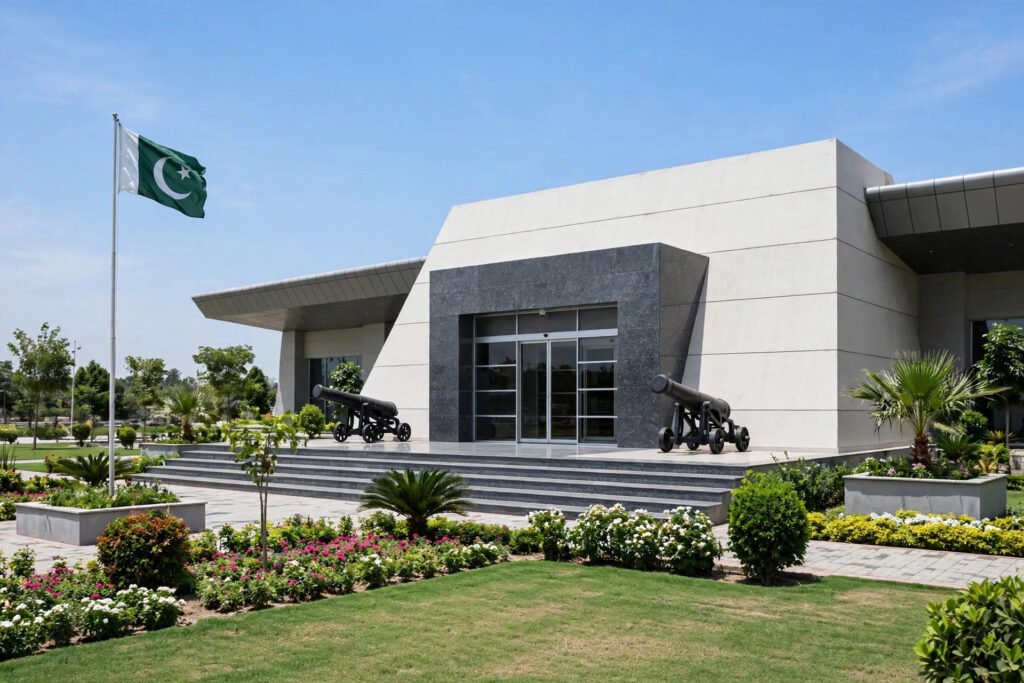
Army Museum Lahore is one of the largest museums in Pakistan, and it tells the story of the Pakistan Army from the Mughal era to the present day. It stands on Amjad Chaudhry Road in Lahore Cantonment, opposite the Lahore airport, and its galleries combine real artefacts, life-size dioramas and outdoor displays of tanks and aircraft.
The museum was inaugurated on 13 August 2017 and opened to the public on 23 September 2017. If you want to understand Pakistan’s military history in one visit, this is the best place in Lahore to do it.
Army Museum Lahore at a Glance
In short: Army Museum Lahore is a military history museum in Lahore Cantonment, opened in 2017. It has indoor galleries on Pakistan’s history, the 1947 partition, the Nishan-e-Haider heroes, Siachen and Kashmir, plus an outdoor display of tanks, helicopters and aircraft. Plan 2 to 3 hours for a full visit.
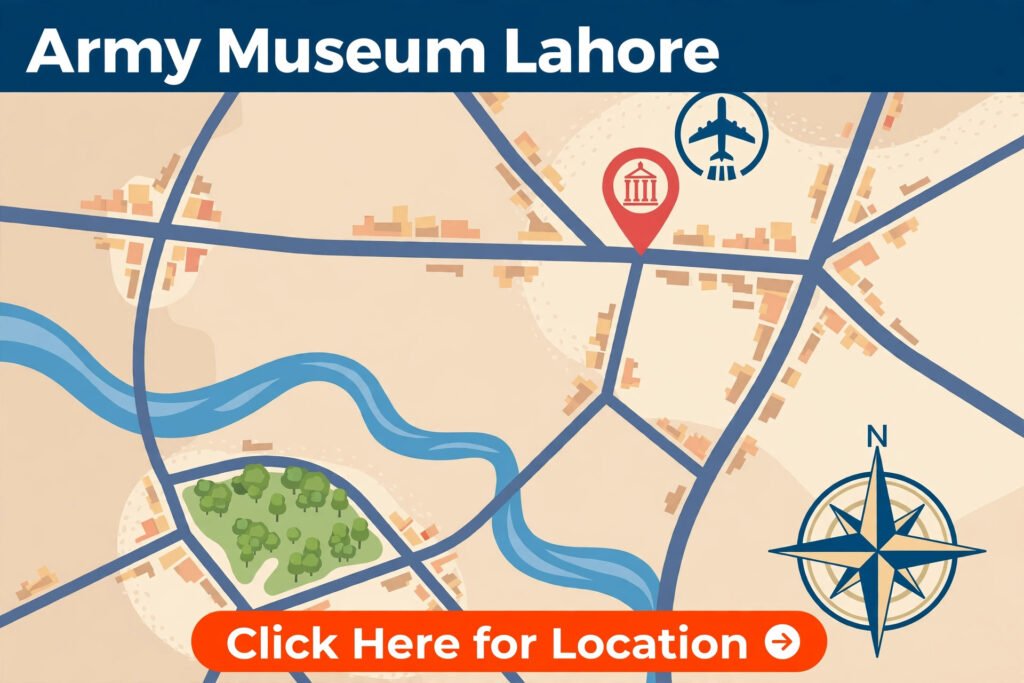
View Army Museum Lahore on Google Maps
In This Guide
- Army Museum Lahore at a Glance
- History of Army Museum Lahore
- Location
- Main Galleries Inside the Museum
- Outdoor Displays: Tanks, Helicopters and Aircraft
- How to Reach Army Museum Lahore
- Best Time to Visit
- Frequently Asked Questions
- Important Disclaimer
History of Army Museum Lahore
After the Army Museum in Rawalpindi was completed in 2014, the then Chief of Army Staff ordered a similar museum for Lahore, improved on the same design. Construction began in 2014.
The museum was inaugurated on 13 August 2017 by Chief of Army Staff General Qamar Javed Bajwa and opened to the public on 23 September 2017. Since then it has become one of the most visited cultural landmarks in Lahore, welcoming students, families, researchers and tourists.
Location
The museum is located on Amjad Chaudhry Road, Saddar Town, in Lahore Cantonment, directly opposite the Allama Iqbal International Airport. Being inside the cantonment area, visitors should carry their national identity card, as it may be checked at entry points.
Main Galleries Inside the Museum
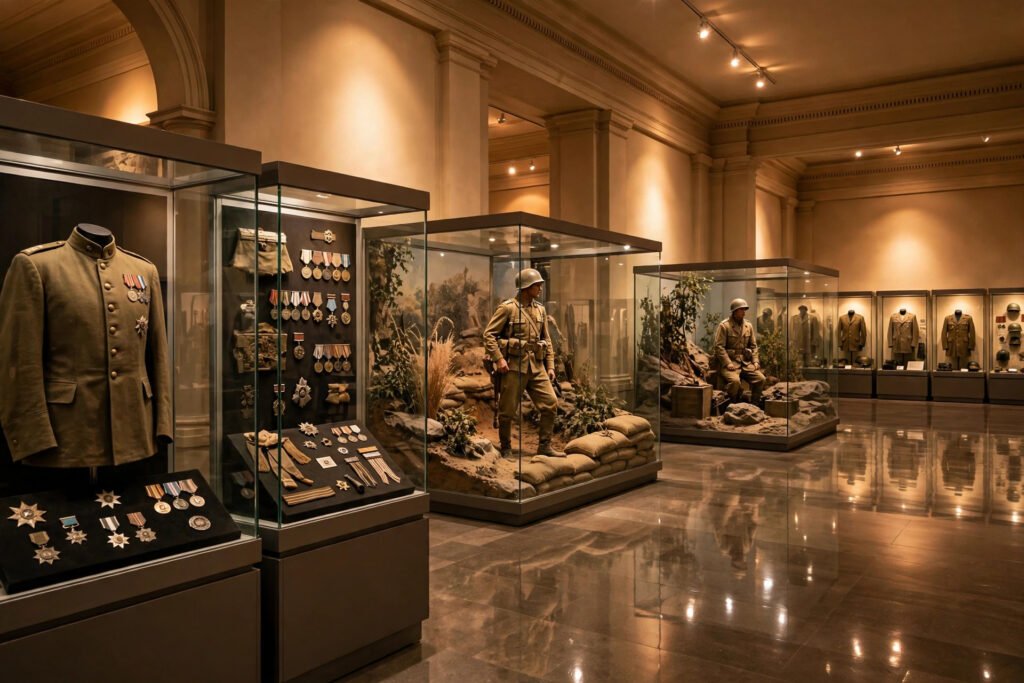
The museum’s galleries walk you through history in order, starting from ancient times and reaching the present day. The best-known galleries include:
Rebirth of a Nation – the story of Pakistan’s creation in 1947, the partition, and the sacrifices of the people who migrated to the new country.
Quaid and Armed Forces – the relationship between Quaid-e-Azam Muhammad Ali Jinnah and the armed forces.
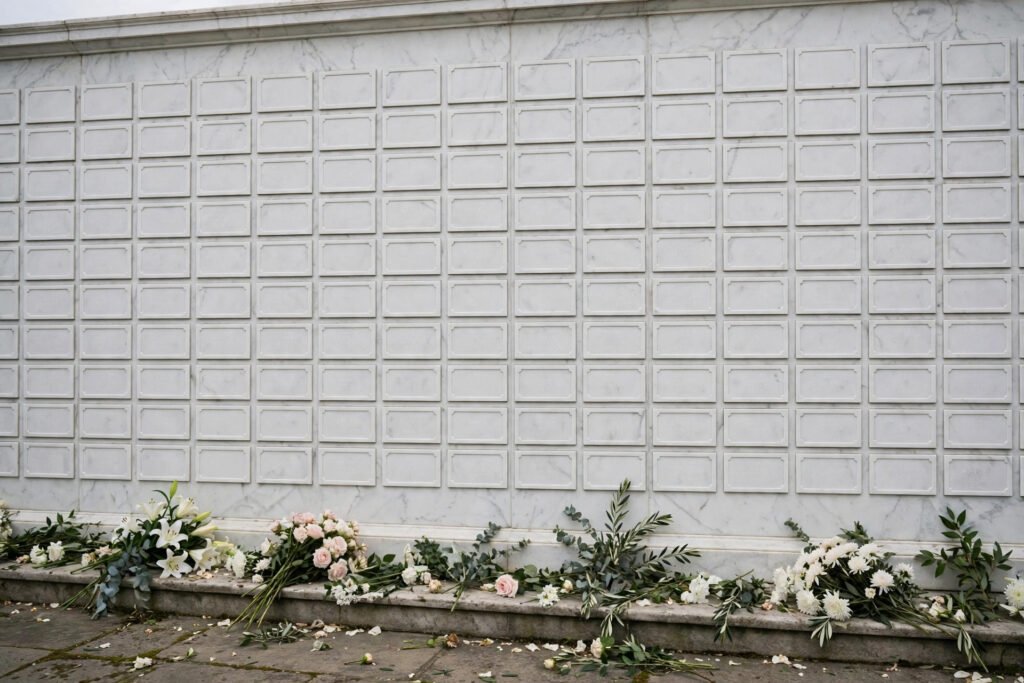
Shuhada Corner – a tribute to the soldiers who gave their lives for Pakistan since 1947, with the names of martyrs engraved on marble.
Nishan-e-Haider Gallery – dedicated to the recipients of Nishan-e-Haider, Pakistan’s highest military award for gallantry.
Life at Siachen – a look at the life of soldiers posted at the Siachen Glacier, the world’s highest battlefield.
Kashmir Corner – the history of the Kashmir region and Pakistan’s position on it.
History of Pakistan – a long gallery covering the region’s past from ancient settlements like Mehrgarh and the Indus Valley Civilization through the Mughal period to the British era.
Evolution of Warfare – how weapons and fighting methods changed over the centuries, with real arms, swords and daggers on display.
Women in Khaki, Tribute to the White of the Flag, and Nation Building – galleries on the role of women in the army, the sacrifices of minorities, and the army’s work in building the country, including UN peacekeeping missions.
There are also around 180 life-size dioramas – realistic three-dimensional scenes made by Pakistani sculptors – that recreate historical moments.
If the galleries leave you wanting more, you will find ten other museums in our guide to museums in pakistan.
Outdoor Displays: Tanks, Helicopters and Aircraft
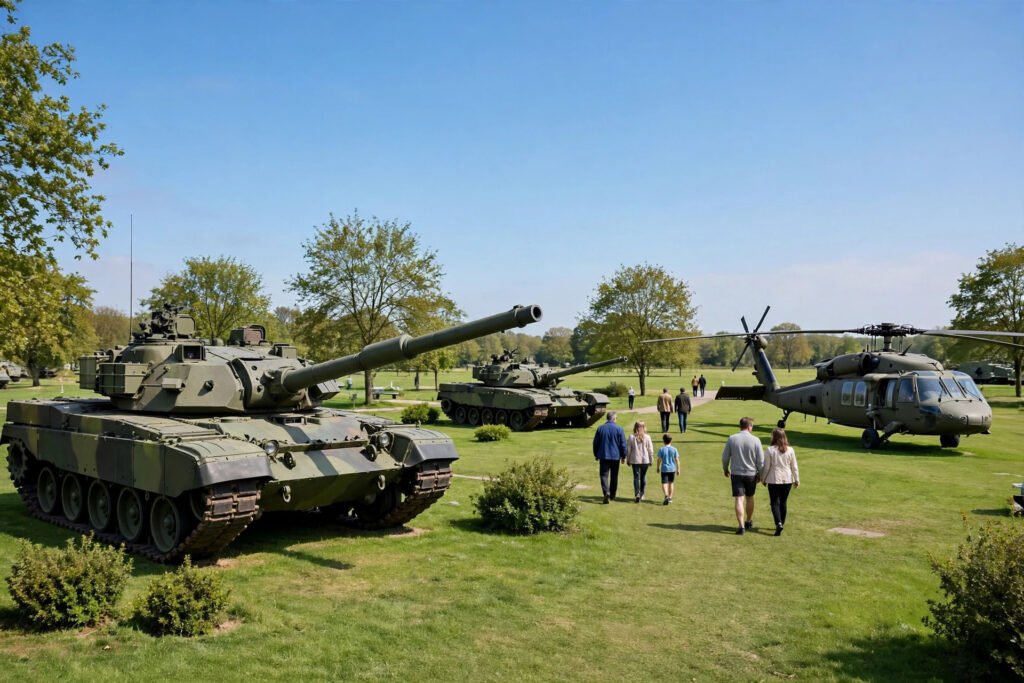
Outside the main building, on the museum’s lawns, you can see real tanks, artillery guns, helicopters and aircraft. Some of the equipment was captured during past wars. Children especially enjoy this part, because they can stand close to the machines and take photographs.
How to Reach Army Museum Lahore
The museum is easy to reach from any part of Lahore. It sits on Amjad Chaudhry Road in the cantonment area, opposite the airport. You can get there by car, taxi or ride-hailing service in about 20 to 30 minutes from central Lahore, depending on traffic. Parking is available for visitors.
Top 11 Famous Museums in Pakistan
Best Time to Visit
The best time to visit Army Museum Lahore is from November to February, when Lahore’s weather is cool and pleasant. Mornings are the best part of the day, because you can see the outdoor displays comfortably before the afternoon. Avoid the hot summer afternoons, especially for the outdoor area.
best places to visit in lahore
Frequently Asked Questions
When was Army Museum Lahore built?
The museum’s construction began in 2014. It was inaugurated on 13 August 2017 and opened to the public on 23 September 2017.
How much time do I need for Army Museum Lahore?
Plan 2 to 3 hours. The indoor galleries take most of the time, and the outdoor display of tanks and aircraft needs at least 30 minutes.
Is photography allowed inside Army Museum Lahore?
Photography rules can change, and some galleries may not allow cameras. Check the current photography policy at the entrance before your visit.
Is Army Museum Lahore good for children?
Yes. Children enjoy the outdoor tanks and helicopters, and the life-size dioramas make history easy to understand for young visitors.
What are the Army Museum Lahore timings?
Museum timings can change by season and day, so check the official website (armymuseumlahore.pk) or call before visiting. A typical visit takes 2-3 hours.
Is there an entry ticket for Army Museum Lahore?
Entry has been free on many days, but ticket and entry policies can change, so confirm the current rules before you go.
Important Disclaimer
Timings, ticket prices, entry rules and photography policies can change over time. At the time of writing, visitors are advised to check the current timings and rules on the museum’s official website or at the gate before planning a trip. The museum is located in a cantonment area, so carry your national identity card and follow all security instructions.