
In This Guide
Hunza Valley, in Gilgit-Baltistan along the Karakoram Highway, is Pakistan’s most loved mountain destination — ancient forts, turquoise lakes, and peaks like Rakaposhi rising above terraced villages.
At a Glance
The best places to visit in Hunza Valley are Baltit Fort, Altit Fort, Attabad Lake, Passu Cones, Khunjerab Pass, Hussaini Suspension Bridge, Borith Lake, Duikar (Eagle’s Nest), Karimabad Bazaar, and the Rakaposhi Viewpoint. Karimabad (about 2,500 m) is the main town. The best time to visit Hunza Valley is April to October.
10 Best Places to Visit in Hunza Valley
1. Baltit Fort
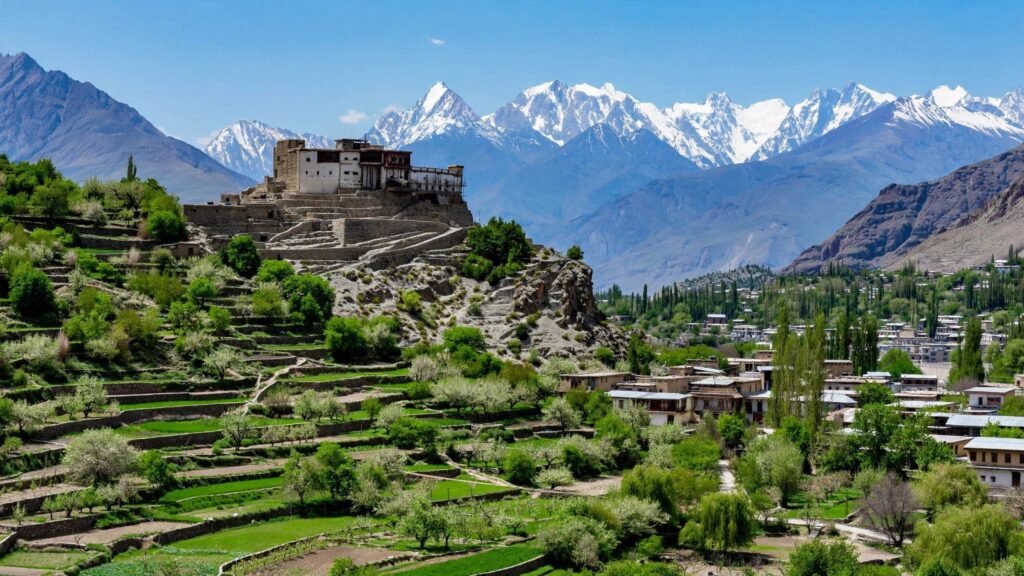
What to do: explore the 700-year-old former royal residence of the Mirs of Hunza, restored as a museum — walk through its rooms and balconies, then descend through the old lanes of Karimabad. How to reach: above Karimabad town, a short walk uphill from the bazaar. Best time: morning, for the best light and fewer visitors. Tip: go early — the fort is the valley’s most visited historic site.

Baltit Fort was the seat of the Mirs of Hunza for centuries, and its Tibetan-influenced architecture reflects the valley’s old trade links with Baltistan and Central Asia. The Aga Khan Trust for Culture restored the fort in the 1990s, and today its museum rooms display royal clothing, weapons, and photographs of the old kingdom. From the rooftop terrace you get a sweeping view of Ultar Sar and the terraced fields of Karimabad below.
View Baltit Fort on Google Maps
2. Altit Fort
What to do: visit one of the oldest forts in the region — over 900 years old, perched on a sheer cliff above the Hunza River, with wooden interiors and the peaceful Shikari watchtower and royal garden nearby. How to reach: in Altit village, a short drive from Karimabad. Tip: Altit is older than Baltit and quieter — the garden is one of the most peaceful spots in the valley.
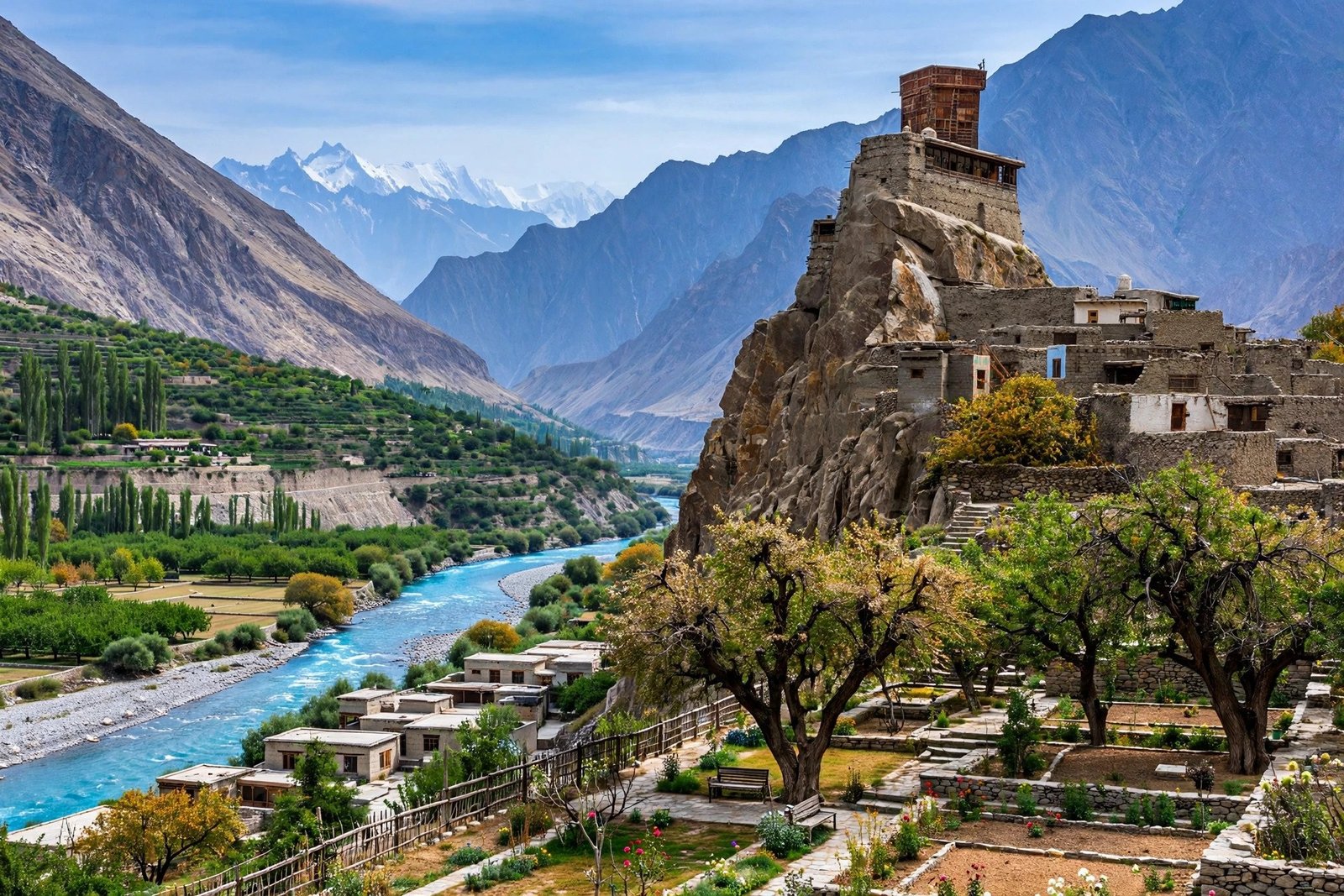
Altit is the original settlement of Hunza — the village existed long before Karimabad grew into the main town. The fort’s Shikari watchtower, standing on a rock pinnacle above the village, was once used to keep watch over the valley, and the 50-room royal garden beside the fort has fruit trees that are centuries old. The fort was also restored by the Aga Khan Trust for Culture, and its wooden interiors show the traditional craftsmanship of the Burusho people.
View Altit Fort on Google Maps
3. Attabad Lake
What to do: see the famous turquoise lake created in 2010 when a landslide dammed the Hunza River — take a boat ride, try jet-skiing, or relax at a lakeside café. The colour shifts from milky jade to deep turquoise with the season. How to reach: on the Karakoram Highway, about 30 minutes from Karimabad. Best time: May to October for boating.
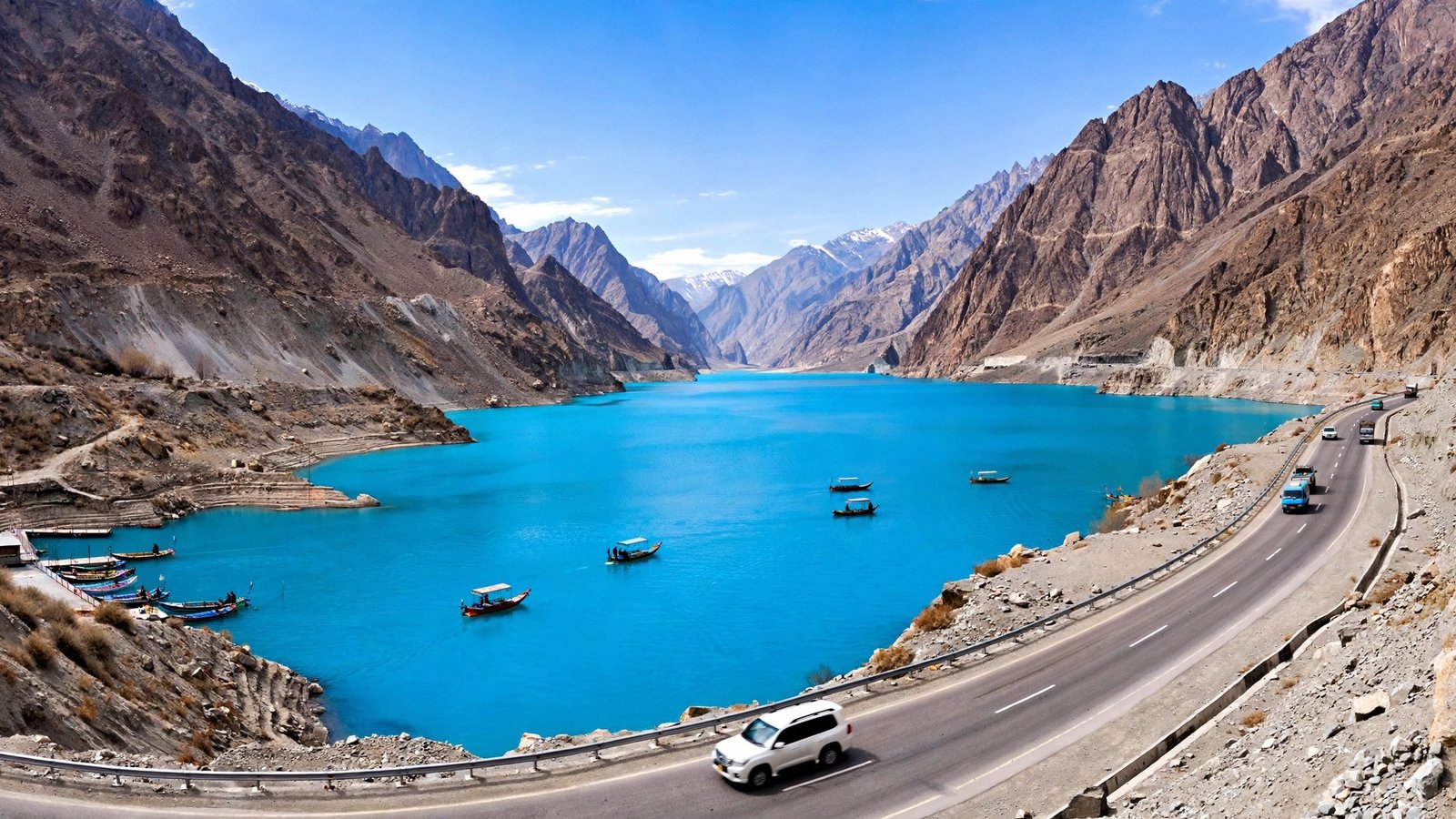
The lake was born in January 2010, when a massive landslide at Attabad village blocked the Hunza River and buried several villages — the water rose for months until it formed a lake about 21 kilometres long. Part of the old Karakoram Highway went under the water, and for years travellers crossed by boat until new tunnels were carved through the mountains. Today the lake is a playground for boating and jet-skiing, and its resorts and cafés stay busy all summer.
View Attabad Lake on Google Maps
4. Passu Cones
What to do: photograph the jagged, cathedral-like Tupopdan peaks — Hunza’s most photographed view. Stop at the highway viewpoint, then continue to Passu village and the Passu Glacier. How to reach: in Upper Hunza (Gojal), about 1.5 hours from Karimabad on the Karakoram Highway. Tip: morning light is best for photos.

The locals call these peaks Tupopdan, and their sharp granite spires rise like a crown above Passu village in Gojal. The Passu Glacier, one of the most accessible glaciers in the region, lies just beyond the village — you can walk part of its trail in a few hours. Passu itself is a Wakhi village, and its small guesthouses and cafés make it a good overnight stop on the way to Khunjerab.
View Passu Cones on Google Maps
5. Khunjerab Pass
What to do: stand at 4,693 m on the Pakistan–China border — one of the highest paved border crossings in the world, inside Khunjerab National Park. Spot marmots and snow-capped peaks. How to reach: long day trip from Hunza via Sost (the last town before the border). Important: the pass is open roughly May to October; check locally before going, as opening dates change with snowfall.

The pass opened as a border crossing in 1982 and sits inside Khunjerab National Park, established in 1975 to protect wildlife like the Marco Polo sheep, ibex, and the rare snow leopard. The drive from Hunza passes through Sost, Pakistan’s last town before China, where the dry port handles cross-border trade. Because the pass is so high, many visitors feel short of breath — walk slowly, drink water, and give yourself time to adjust.
View Khunjerab Pass on Google Maps
6. Hussaini Suspension Bridge
What to do: cross one of the world’s most thrilling suspension bridges — 660 feet long with 472 wooden planks, hanging 50 feet above the Hunza River. Only for steady nerves! How to reach: at Hussaini village in Gojal, near Passu. Tip: go in the morning when the wind is calm; hold the side ropes and walk slowly.
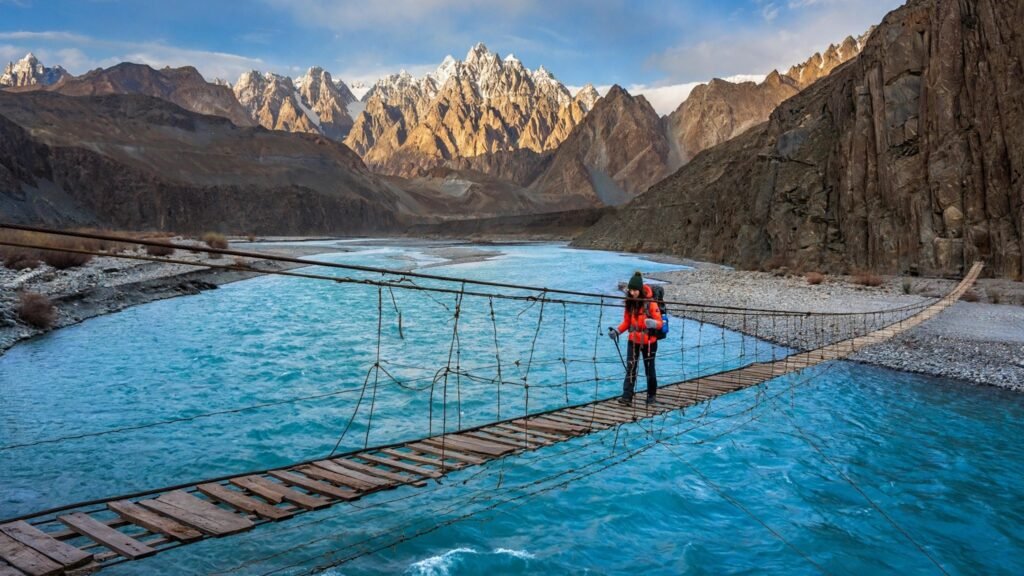
The bridge was built by local villagers to connect Hussaini with the fields and village of Zarabad across the river, and it is still used by locals every day. Many of its wooden planks are missing or loose, which is why crossing it feels so thrilling — you can see the river rushing 50 feet below through the gaps. Cross only in calm weather, wear shoes with good grip, and never attempt it in strong wind or rain.
View Hussaini Suspension Bridge on Google Maps
7. Borith Lake
What to do: enjoy a small, quiet lake above Hussaini village — still water, mountain reflections, and birdlife in season. A peaceful break from the busier stops. How to reach: short drive and walk from Hussaini. Best time: summer, when the track is open.

Borith Lake is a favourite spot for birdwatchers — migratory ducks and geese stop here in spring and autumn on their way across the Karakoram. The lake sits on the route of the popular Passu Glacier and Patundas Meadows treks, so many trekkers pass by on multi-day hikes. Because it is smaller and quieter than Attabad, it is the place to go when you want stillness and mountain reflections without the crowds.
View Borith Lake on Google Maps
8. Duikar (Eagle’s Nest)
What to do: watch sunset or sunrise from the valley’s best viewpoint — Rakaposhi, Diran, Ultar Sar, and Ladyfinger Peak light up at once. How to reach: short drive above Duikar village from Karimabad. Tip: sunset is the classic experience; arrive 30 minutes early for a good spot. Carry a warm jacket — it gets cold at the top even in summer.

Duikar sits at nearly 3,000 metres, which is why the panorama from Eagle’s Nest feels so vast — on a clear evening you can see four great peaks (Rakaposhi, Diran, Ultar Sar, and Ladyfinger) glowing at once. A few hotels and camps near the viewpoint let you stay overnight and catch both sunset and sunrise. The road up from Karimabad is steep but short, and local drivers know it well — hire one from the bazaar rather than driving yourself at night.
9. Karimabad Bazaar
What to do: explore the lively main bazaar of Hunza — handicrafts, dried fruits and apricots, gemstones, and local food. Try chapshuro (meat-filled bread), harissa, and walnut cake. How to reach: Karimabad is the central town, on the Karakoram Highway. Tip: evenings are the liveliest; bargain politely in the craft shops.
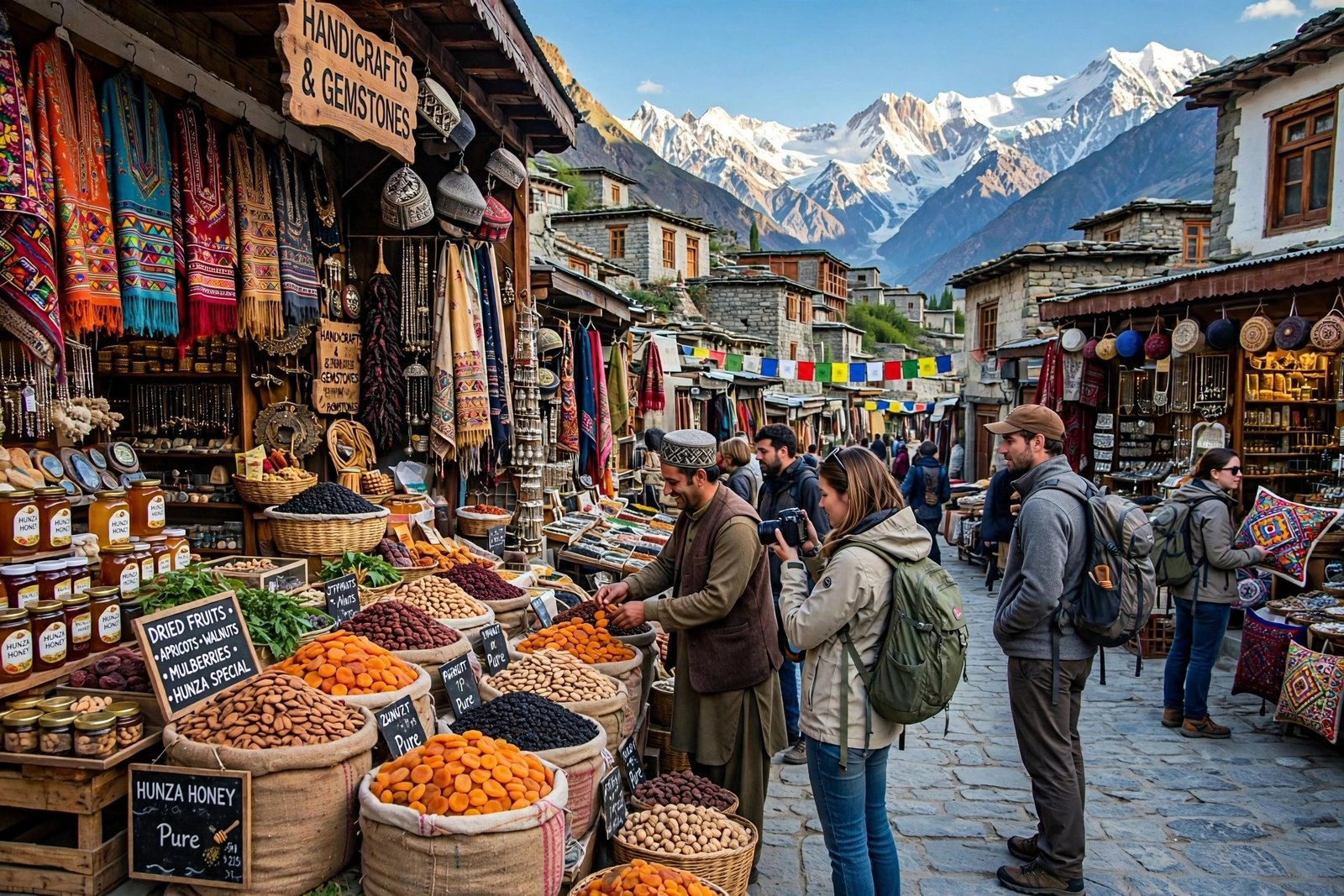
Karimabad was the old capital of the Hunza kingdom, and its bazaar still has the feel of a mountain trading town — shops sell dried apricots, apricot oil, walnut products, embroidered caps, and gemstones from the surrounding valleys. The cafés on the upper edge of the bazaar have terraces with direct views of Rakaposhi and Ultar Sar, making them perfect for an evening tea. Most shops open by mid-morning and stay lively until late evening in the tourist season.
View Karimabad Bazaar on Google Maps
10. Rakaposhi Viewpoint
What to do: see Rakaposhi (7,788 m) rising almost straight up from the road — a classic photo stop with tea stalls. How to reach: on the Karakoram Highway near Ghulmet in Nagar, on the way into Hunza. Tip: the mountain is clearest in the morning; clouds often cover it by afternoon.

Rakaposhi, at 7,788 metres, is one of the most beautiful mountains in the world partly because it rises uninterrupted from the valley floor — a vertical drop of nearly 6,000 metres. The viewpoint near Ghulmet in Nagar is also called Zero Point, and the nearby village of Minapin is the starting point for treks to the Rakaposhi base camp. Stop here on your way into Hunza from Gilgit, when the morning light makes the mountain glow pink and gold.
View Rakaposhi Viewpoint on Google Maps
How to Reach
Hunza Valley is in Gilgit-Baltistan, about 600 km from Islamabad on the Karakoram Highway. From Islamabad: drive the Karakoram Highway (5–7 days round trip at a relaxed pace), or fly to Gilgit and drive 2–3 hours to Karimabad. From Skardu: the drive to Hunza takes about 7–8 hours via Gilgit. For the wider region, see our guide to places to visit in northern areas.
Best Time to Visit
The best time to visit Hunza Valley is April to October. April brings cherry and apricot blossom, June to September is peak season with all attractions open, and late October brings golden autumn colours. Winter (November to March) is very cold, and Khunjerab Pass stays closed. For more scenic valleys, see our guide to the most beautiful places in pakistan.
Planning your budget for this trip? Use our free pakistan trip cost calculator to estimate your fuel, hotel and food costs before you leave.
FAQs
What are the best places to visit in Hunza Valley?
The top places are Baltit Fort, Altit Fort, Attabad Lake, Passu Cones, Khunjerab Pass, Hussaini Suspension Bridge, Borith Lake, Duikar viewpoint, Karimabad Bazaar, and the Rakaposhi Viewpoint.
What is the distance from Islamabad to Hunza?
Hunza is about 600 km from Islamabad by road on the Karakoram Highway. The drive takes 12–14 hours non-stop, but most travellers split it over two days.
What is the distance from Lahore to Hunza?
Lahore to Hunza is roughly 900 km by road — usually a two-day drive via Islamabad and the Karakoram Highway.
What is the distance from Skardu to Hunza?
Skardu to Hunza is about 350 km by road via Gilgit, taking 7–8 hours.
What is the best time to visit Hunza Valley?
April to October is the best time. April for blossom season, June to September for peak summer, and late October for autumn colours.
For more detail, see this Hunza Valley travel guide on Guide to Pakistan.
What are the best places to visit in Hunza?
Our guide covers 10 places to visit in Hunza including Karimabad, Baltit Fort, Altit Fort, Attabad Lake, the Hussaini Suspension Bridge and Khunjerab Pass — forts, lakes and mountain viewpoints across Hunza Valley, Pakistan.
How far is Hunza from Islamabad?
Hunza (Karimabad) is about 600 km from Islamabad via the Karakoram Highway — roughly a 12 to 16 hour drive depending on the route and stops. Many travellers split the journey over two days.
How far is Hunza from Lahore?
Hunza is about 940 to 980 km from Lahore by road, via Islamabad and the Karakoram Highway — roughly a 16 to 20 hour drive, so plan an overnight stop on the way.
Important Disclaimer
Khunjerab Pass opening dates, road conditions, and boating availability change with the seasons — confirm locally before travelling. Mountain weather changes fast; carry warm clothing even in summer. Respect local customs in the villages.