
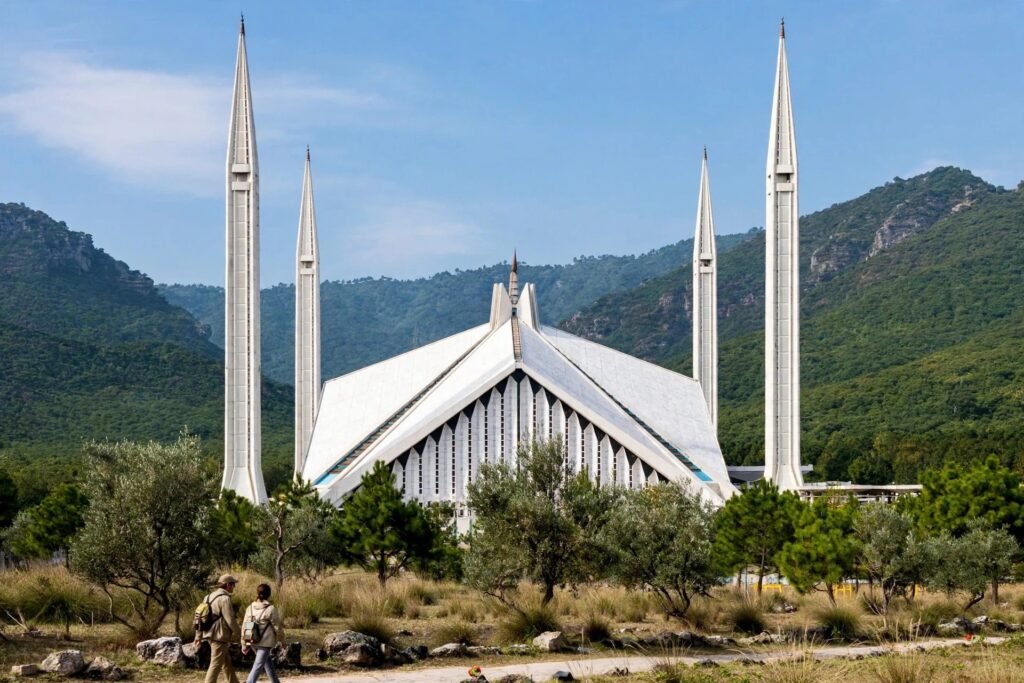
Faisal Mosque Islamabad is Pakistan’s national mosque and the most famous landmark in Islamabad. People also call it Faisal Masjid, and many people in Pakistan search for it by that name. It stands at the foot of the Margalla Hills, at the northern end of Faisal Avenue, in Sector E-8. Its white tent-shaped design, with four slender minarets, looks different from a traditional domed mosque, and that is why visitors notice it from many parts of the city.
This guide covers the history of Faisal Mosque, its architecture, how to reach it, visiting rules, the best time to visit, and nearby places.
In short: It is Pakistan’s national mosque at the foot of the Margalla Hills in Islamabad. Entry is free, and the best time to visit is October to April, in the morning or evening.
In This Guide
- History
- Architecture: Why There Is No Dome
- How to Reach
- Visiting Rules and Dress Code
- Best Time to Visit
- Best Viewpoints
- Location and Bus Stand
- Prayer Time and Jumma Time
- Interior and Capacity
- Metro Station Nearby
- Nearby Places to Visit
- Frequently Asked Questions
- Important Disclaimer
History
First, the idea of a national mosque for Pakistan took shape in the late 1960s. Saudi Arabia’s King Faisal bin Abdul-Aziz supported and funded the project, and the mosque carries his name.
Turkish architect Vedat Dalokay won the international design competition in 1969. Construction began in 1976 and construction finished in 1986. When it opened, it was the largest mosque in the world, a title it held until 1993.

Architecture: Why There Is No Dome
Faisal Mosque does not have a traditional dome. Instead, its prayer hall is an eight-sided concrete shell shaped like a Bedouin tent. This was a deliberate choice by the architect, and it also gives the mosque its modern look.
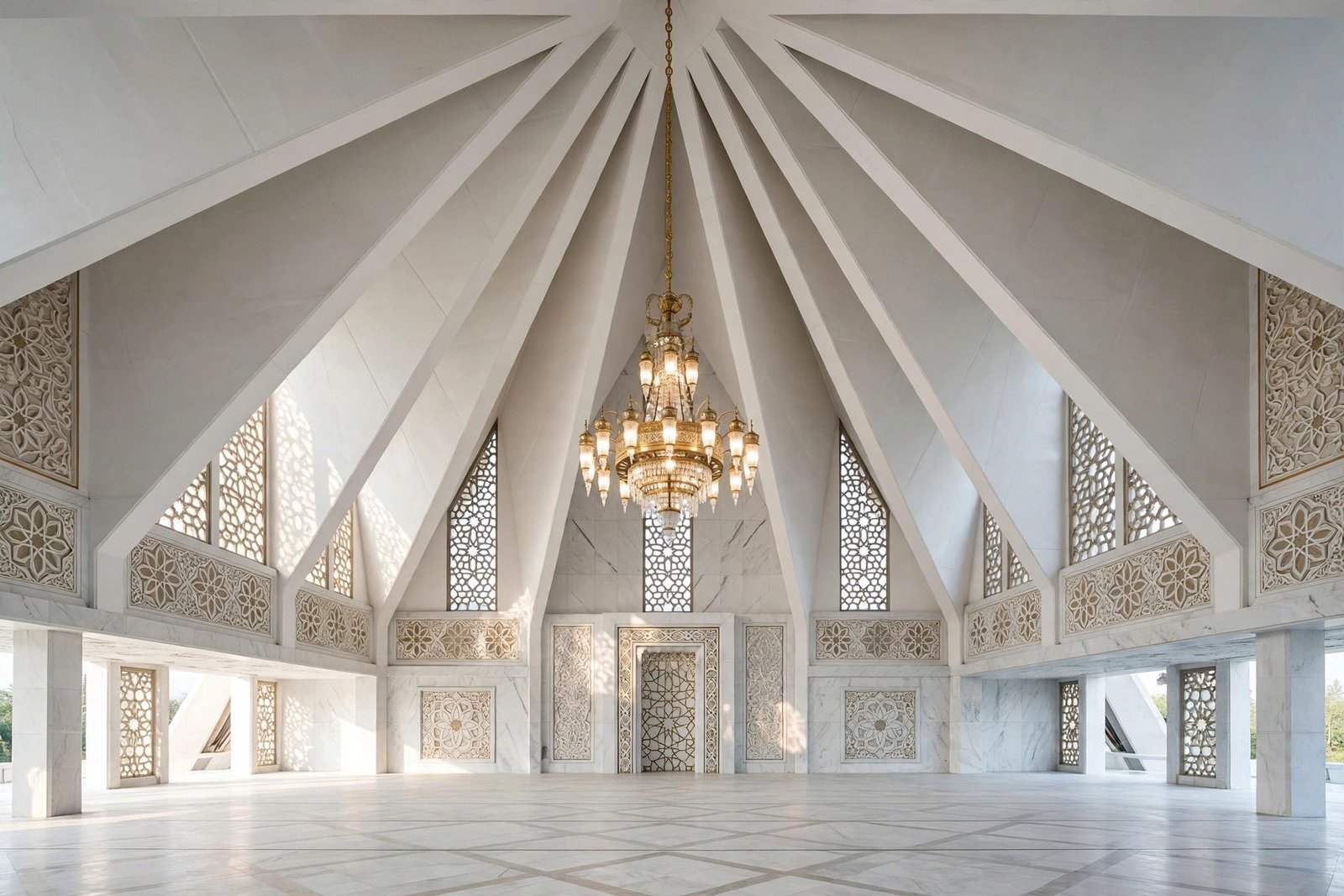
The four minarets are about 80 metres tall, thin and pencil-shaped, in a style that recalls Turkish mosques. Then, inside, the main wall carries calligraphy, and a large chandelier hangs over the prayer hall. The broad marble courtyard gives views up to the Margalla Hills.
How to Reach
Faisal Mosque Islamabad is in Sector E-8, at the northern end of Faisal Avenue, Islamabad. From the city centre, you can reach it by car or taxi in about 20 to 30 minutes, depending on traffic. Finally, driving up Faisal Avenue gives a straight, dramatic view of the mosque against the hills.
Parking is available near the premises. Then, from Islamabad International Airport, the drive is about 30 kilometres, roughly 35 minutes in normal traffic.
To reach the mosque by road, follow Faisal Avenue to its northern end in Sector E-8, at the foot of the Margalla Hills.
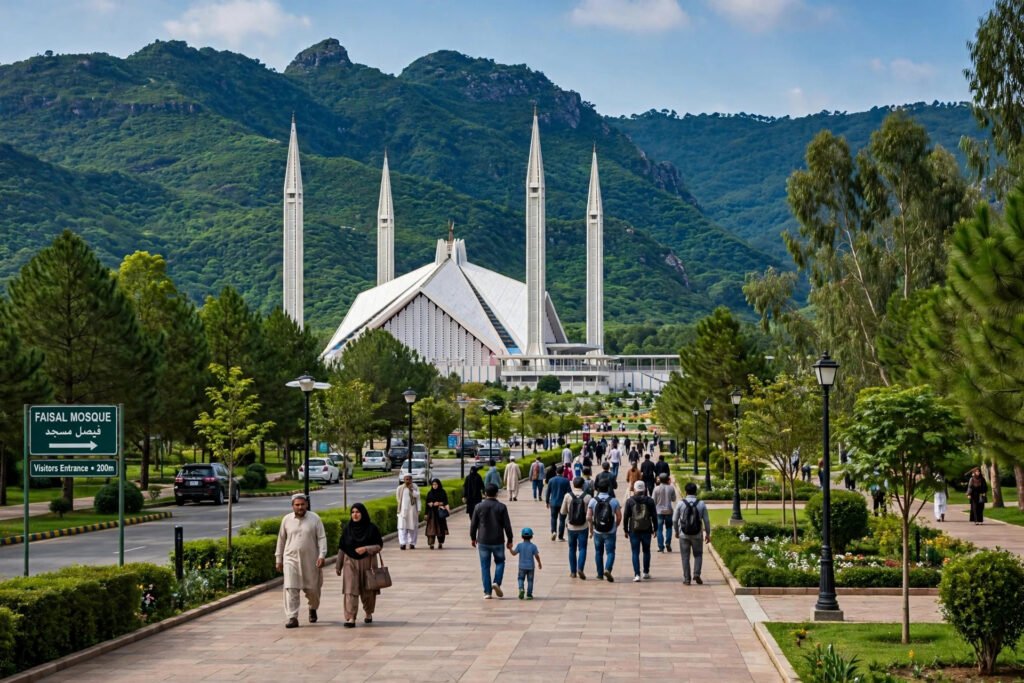
View Faisal Mosque on Google Maps
Visiting Rules and Dress Code
Faisal Mosque is a working mosque, so visitors should respect prayer times and religious rules.
- Entry is free for all visitors. There is no entry fee.
- Dress modestly. Cover arms and legs, and women should cover their heads with a scarf.
- Remove shoes before entering the main prayer hall.
- Photography is generally allowed in open areas for non-commercial use, but avoid taking pictures of worshippers or during prayer times.
- Keep your voice low and follow any instructions from mosque staff.
- The mosque is open daily, outside prayer times. It is closed to tourists for a short period during prayer times, especially on Fridays during congregational prayer. Visiting hours can vary during Ramadan, Eid, or special events, so check locally before you go.

Best Time to Visit
The best time to visit Islamabad, and Faisal Mosque, is from October to April, when the weather is cool and pleasant. For photography, early morning or evening, around sunset, gives the best light. Finally, the mosque looks especially beautiful when it is lit up at night.
Weekdays are quieter. However, Fridays are crowded because of Jumma prayer, so if you are not attending the prayer, avoid visiting during that time.
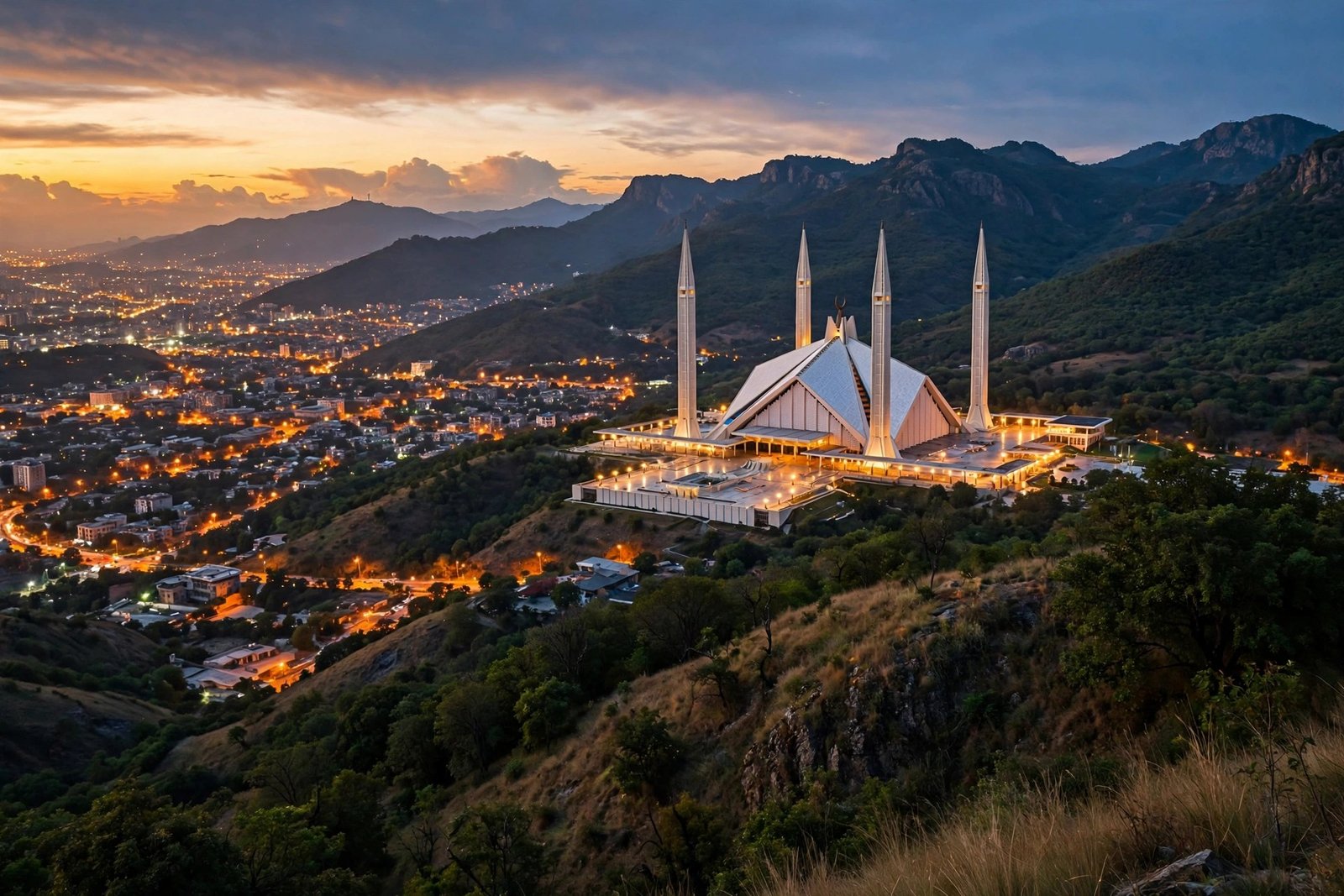
Best Viewpoints
- Daman-e-Koh: a hilltop viewpoint that gives the best panoramic view of the mosque against the hills.
- Margalla Hills trails: hiking trails directly behind the mosque give views from above.
- Faisal Avenue approach: driving up the avenue gives a straight-on view.
Location and Bus Stand
Faisal Mosque stands at the northern end of Faisal Avenue, Sector E-8, Islamabad, at the foot of the Margalla Hills. First, a bus stand near Faisal Mosque serves local routes; then, taxis and ride-hailing cars also reach the mosque easily.
Prayer Time and Jumma Time
Daily prayer times follow the mosque schedule and change through the year, so check the current timing before you go. Jumma prayer on Friday is the busiest time, with a large congregation, so visitors who are not attending Jumma should avoid that hour. Jumma time changes through the year, so check the current Friday schedule before you go.
Interior and Capacity
The interior prayer hall is large and open, with calligraphy on the main wall and a large chandelier. The hall, porticoes, courtyard and grounds together can hold a very large congregation, so it ranks among the largest mosques in the region.
Metro Station Nearby
The nearest metro bus station to Faisal Mosque is on the main Islamabad metro route; then, from there you can take a taxi or local transport to the mosque. Check the current metro route before you travel, because routes and stops can change.
If you are planning a wider trip, explore our guide to places to visit in Pakistan for more destinations across the country.
Nearby Places to Visit
After Faisal Mosque, you can also explore Daman-e-Koh, Margalla Hills National Park, Pakistan Monument, Shakarparian Park, Lake View Park, and Saidpur Village.
If you are planning a longer trip, also read our guide on places to visit in Islamabad.
For more background on its history and design, read about Faisal Mosque Islamabad on Wikipedia.
Frequently Asked Questions
Is there an entry fee?
No. Visitors can enter Faisal Mosque free of charge.
Can tourists visit?
Yes, tourists of all faiths are welcome outside prayer times, with modest dress and respect for the mosque’s rules.
Who designed it?
Turkish architect Vedat Dalokay designed Faisal Mosque after winning an international competition in 1969.
Why is there no dome?
The architect deliberately replaced the traditional dome with a tent-shaped eight-sided shell, inspired by the Bedouin desert tent.
When was it completed?
1986. Construction began in 1976 and finished in 1986.
How much time do I need?
About 1 to 1.5 hours is enough to see the hall, courtyard, and viewpoints.
Why is Faisal Mosque famous?
Faisal Mosque is famous for its modern tent-shaped design without a traditional dome, its location at the foot of the Margalla Hills, and its status as Pakistan’s national mosque.
Important Disclaimer
Please note: timings, entry rules, photography rules, and dress-code requirements can change from time to time. At the time of writing, there is no entry ticket for visitors, but a ticket or new rules may be introduced later. Photography is generally allowed in open areas, but it may be restricted during prayers or in certain areas, and visitors should not photograph worshippers. Dress modestly. Women commonly visit in shalwar kameez with a dupatta or head covering, but stricter covering may be asked at the gate on a given day, so carry a head covering and check the current rules before you go.