In This Guide
- At a Glance
- 1. K2
- 2. Nanga Parbat
- 3. Gasherbrum I
- 4. Broad Peak
- 5. Gasherbrum II
- 6. Gasherbrum IV
- 7. Distaghil Sar
- 8. Masherbrum
- 9. Rakaposhi
- 10. Tirich Mir
- How to Reach the Mountain Regions
- Best Time to See the Peaks
- FAQs
Pakistan is home to some of the tallest mountains on Earth. Five of the world’s fourteen 8,000-metre peaks stand here, all in the Karakoram and Himalayan ranges of Gilgit-Baltistan. This guide lists the ten highest mountain peaks in Pakistan, with their heights, ranges, and the best viewpoints to see them.
At a Glance
The highest mountain peaks in Pakistan are led by K2 at 8,611 metres, the second-highest mountain in the world. It is followed by Nanga Parbat (8,126 m), Gasherbrum I (8,080 m), Broad Peak (8,051 m), and Gasherbrum II (8,035 m) — five peaks above 8,000 metres. The list continues with Gasherbrum IV, Distaghil Sar, Masherbrum, Rakaposhi, and Tirich Mir, the highest peak of the Hindu Kush. The best time to see these peaks is May to October, when skies are clearest.
If you want the valleys, lakes and high passes around these peaks as well, see our guide to the northern areas of pakistan before you choose a base town.
1. K2

K2, at 8,611 metres, is the highest mountain peak in Pakistan and the second-highest in the world after Mount Everest. It stands in the Karakoram range in Gilgit-Baltistan, on the border with China.
The best viewpoint for K2 is Concordia, the meeting point of glaciers, reached by a long trek from Skardu. Most visitors see K2 only on expeditions, but its name and fame make it the crown of Pakistan’s mountains.
K2 is also called the Savage Mountain because it is one of the hardest climbs in the world. It was first summited in 1954 by an Italian expedition, and far fewer people have reached its top than Everest’s.
2. Nanga Parbat
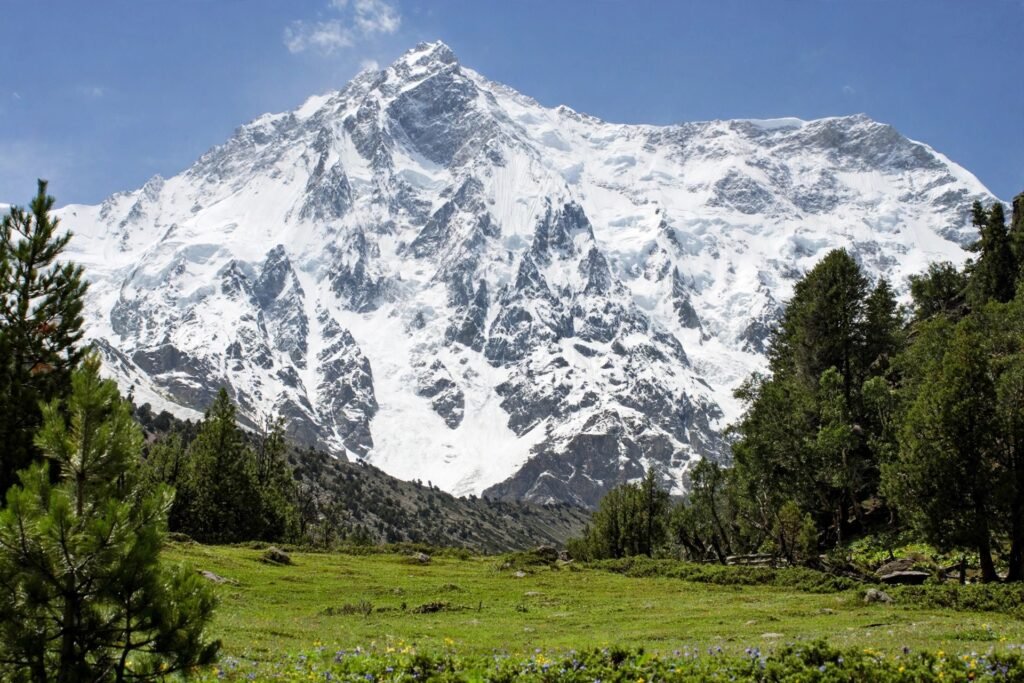
Nanga Parbat rises to 8,126 metres in the western Himalayas, making it the ninth-highest mountain in the world. It is often called the “Killer Mountain” because of its difficult climbing history.
The best viewpoint is Fairy Meadows, a lush alpine meadow near the Raikot Bridge on the Karakoram Highway. From Fairy Meadows, Nanga Parbat’s huge Rupal Face fills the sky — one of the most famous mountain views in Pakistan.
Nanga Parbat was first summited in 1953 by Hermann Buhl, who made the final push alone. Its Rupal Face, rising about 4,600 metres from base to summit, is one of the largest mountain faces on Earth.
3. Gasherbrum I
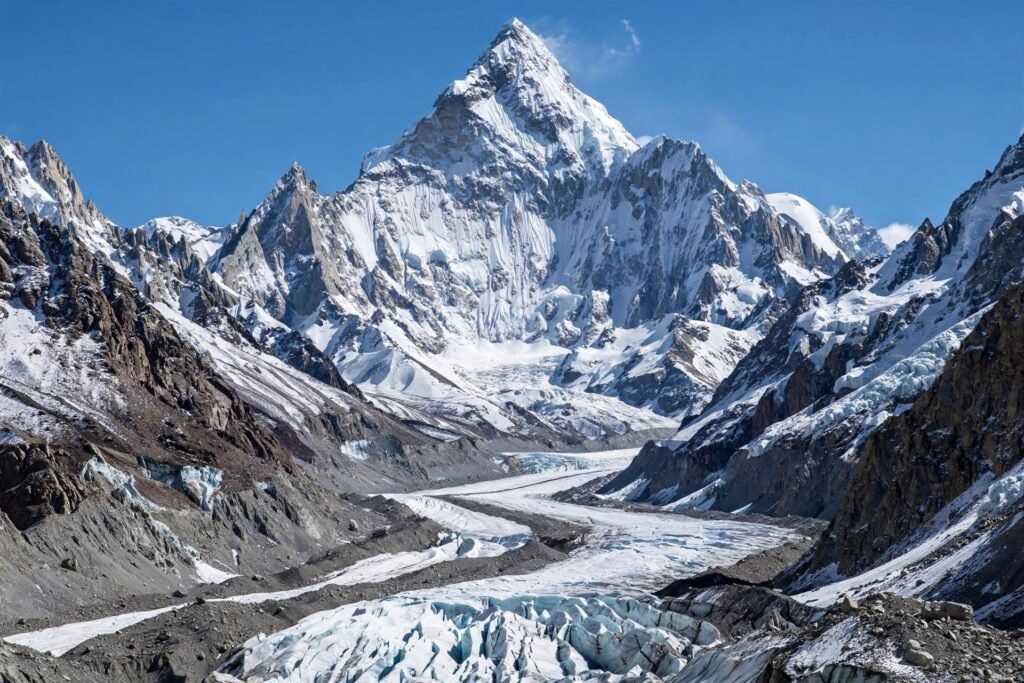
Gasherbrum I, also called Hidden Peak, is 8,080 metres high and stands in the Karakoram near K2. It was named “Hidden Peak” because it stays out of sight until climbers get deep into the mountains.
It is usually seen from the upper Baltoro Glacier region by expedition teams. Like its neighbours, it is a serious climbing peak, not a tourist viewpoint mountain.
Gasherbrum I was first climbed in 1958 by an American expedition. Because it hides behind other peaks, early explorers could not even see it until they were deep in the Karakoram.
4. Broad Peak

Broad Peak is 8,051 metres high and stands close to K2 in the Karakoram. Its name comes from its wide, broad summit ridge, which stretches over a kilometre.
It is visible from Concordia and the upper Baltoro area on the K2 trek route. Climbers often attempt it together with K2 because the two base camps are near each other.
Broad Peak was first summited in 1957 by an Austrian expedition. Its long summit ridge gives climbers a false summit before the true top, which has turned back many teams.
5. Gasherbrum II
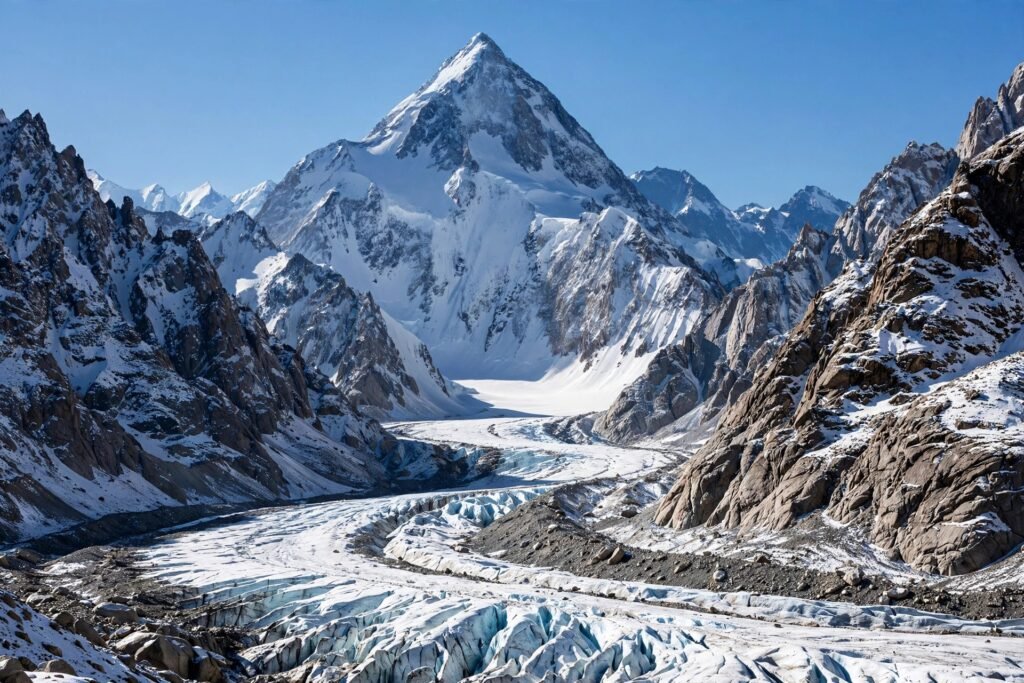
Gasherbrum II reaches 8,035 metres in the Karakoram and is considered one of the more accessible 8,000-metre peaks for experienced climbers. It stands in the same Gasherbrum group as Gasherbrum I.
It can be seen from the Baltoro Glacier trekking route. Its pyramid shape makes it one of the most photographed peaks of the group.
If you want valley views rather than expedition peaks, also see our guide to places to visit in northern areas.
Gasherbrum II was first climbed in 1956 by an Austrian expedition. Among the 8,000-metre peaks of Pakistan, it is often called the most straightforward, though no 8,000er is ever easy.
6. Gasherbrum IV
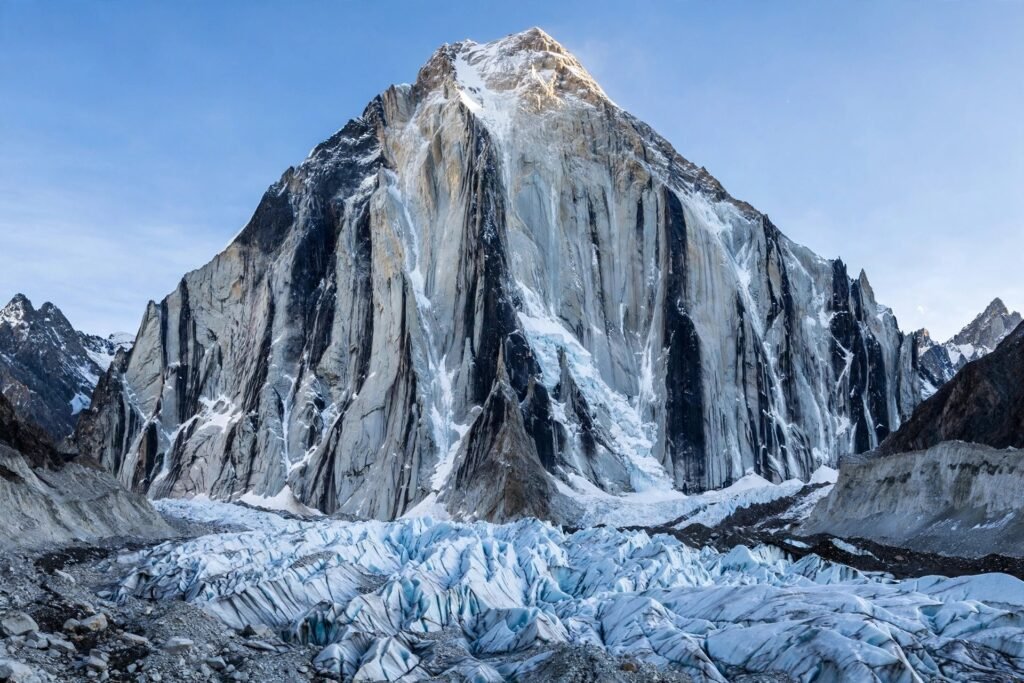
Gasherbrum IV is 7,925 metres high and famous among climbers for its stunning West Face — a huge wall of rock and ice. It stands in the Karakoram near the other Gasherbrum peaks.
It is visible from the Baltoro region. Non-climbers rarely see it up close, but its reputation makes it a legend in mountaineering history.
Gasherbrum IV became famous after its first ascent in 1958 by Italians Walter Bonatti and Carlo Mauri, who climbed the steep West Face in alpine style. Their climb is still called one of the greatest in history.
7. Distaghil Sar

Distaghil Sar, at 7,885 metres, is the highest peak of the Hispar Muztagh, a sub-range of the Karakoram. It towers above the Hispar Glacier in Gilgit-Baltistan.
It is best viewed from the Hispar region. The peak’s long ridges make it stand out even among Karakoram giants.
Distaghil Sar was first climbed in 1960 by an Austrian expedition via its west ridge. It remains one of the least-visited high peaks of the Karakoram.
8. Masherbrum
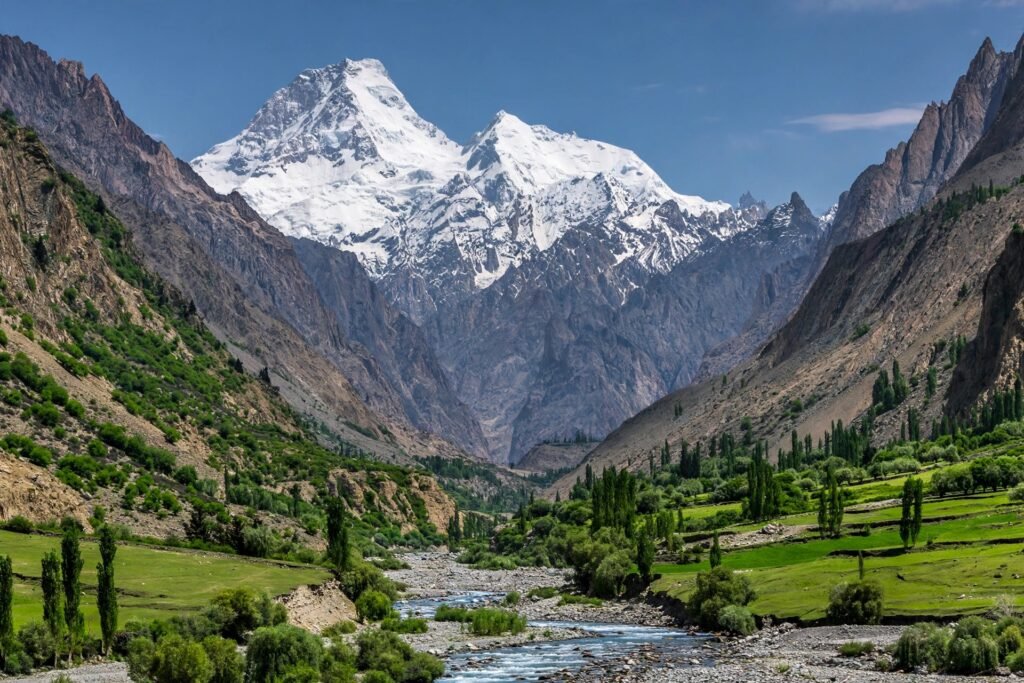
Masherbrum, also known as K1, is 7,821 metres high and stands in the Karakoram near the Hushe Valley. Its name was given by early surveyors, and “K1” simply meant the first peak of the Karakoram range they recorded.
The Hushe Valley offers the closest road-accessible views of Masherbrum. Trekkers heading to Gondogoro La also see it along the way.
Masherbrum was first summited in 1960 by an American-Pakistani expedition. Its striking pyramid shape makes it easy to recognise from the Hushe Valley.
9. Rakaposhi

Rakaposhi, at 7,788 metres, rises above the Nagar Valley in Gilgit-Baltistan. Unlike the remote 8,000-metre peaks, Rakaposhi is easy to see — it dominates the skyline along the Karakoram Highway.
The best viewpoints are Minapin village and the Karakoram Highway between Gilgit and Hunza. On clear days, its snow-covered face is visible from far away, making it one of the most loved peaks in Pakistan.
Rakaposhi was first climbed in 1958 by a British-Pakistani expedition via the southwest ridge. Unlike most high peaks, it rises directly from cultivated valleys, so villagers see it every day.
10. Tirich Mir
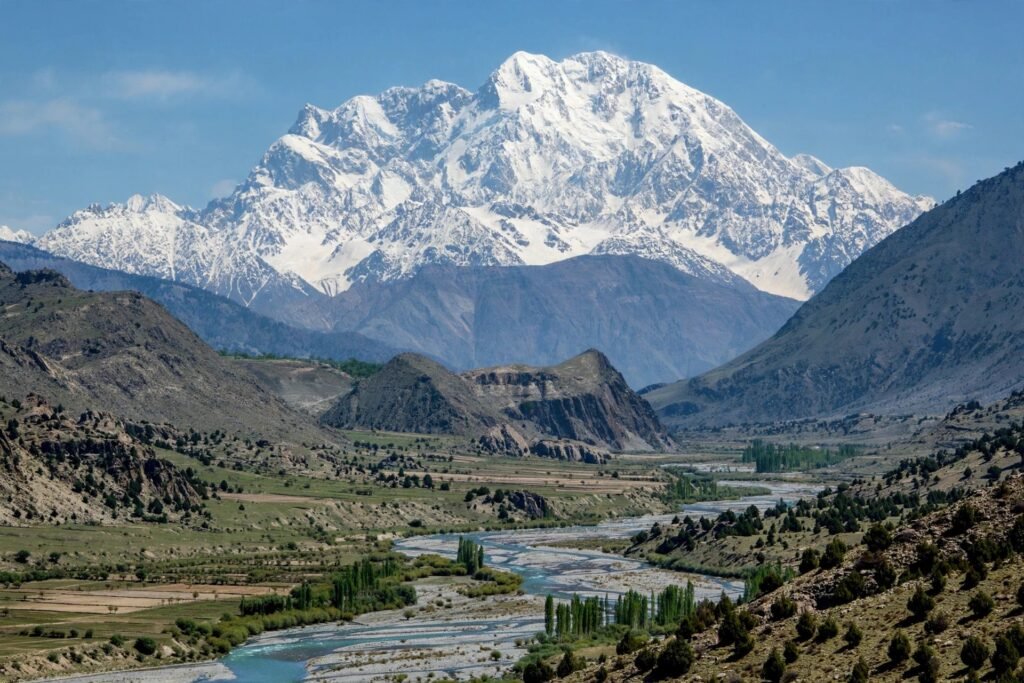
Tirich Mir, at 7,708 metres, is the highest peak of the Hindu Kush range and stands in Chitral, Khyber Pakhtunkhwa. It is the tallest mountain in the world outside the Himalaya-Karakoram ranges.
The best viewpoint is Chitral town itself — on clear mornings, Tirich Mir rises directly above the town. It can also be seen from the road toward Shandur.
For trekking and climbing ideas in these ranges, see our guide to adventure travel in pakistan.
Tirich Mir was first summited in 1950 by a Norwegian expedition. It is the highest peak of the Hindu Kush and a symbol of Chitral, visible from many parts of the town.
Together, the highest mountain peaks in Pakistan include five of the world’s fourteen 8,000-metre giants, making the country one of the greatest mountain destinations on Earth.
How to Reach the Mountain Regions
Most of these peaks are in Gilgit-Baltistan. The usual route is by road on the Karakoram Highway from Islamabad, or by flight to Skardu or Gilgit (flights depend on weather). Chitral’s Tirich Mir is reached via the Lowari Tunnel road from Dir. Remote peaks like K2 and the Gasherbrums need multi-day treks with licensed guides — plan through registered tour operators and check current conditions before going.
Best Time to See the Peaks
The best time to see Pakistan’s highest peaks is May to October, when skies are clearest and roads are open. July to September offers the clearest mountain views. Winter (November to March) brings heavy snow, closed roads, and extreme cold — the mountains are beautiful but hard to reach.
If the peaks inspired you, see our guide to the top 10 places to visit in pakistan for valleys, forts and cities to add to your trip.
FAQs
Which is the highest mountain peak in Pakistan?
K2, at 8,611 metres in the Karakoram range of Gilgit-Baltistan, is the highest mountain peak in Pakistan and the second-highest in the world.
How many 8,000-metre peaks are in Pakistan?
Pakistan has five peaks above 8,000 metres: K2 (8,611 m), Nanga Parbat (8,126 m), Gasherbrum I (8,080 m), Broad Peak (8,051 m), and Gasherbrum II (8,035 m).
What is the best time to see the mountain peaks of Pakistan?
May to October is the best time, with July to September offering the clearest views. Winter brings snow and road closures in the mountain regions.
Can beginners visit these mountain peaks?
The 8,000-metre peaks are expedition climbs for experts only. But beginners can enjoy stunning views from easy viewpoints like Fairy Meadows (Nanga Parbat), Minapin (Rakaposhi), and Chitral town (Tirich Mir). Always go with licensed local guides.
For a full reference list, see the highest mountain peaks in Pakistan on Wikipedia.
Important Disclaimer
Mountain weather, road conditions, trekking routes, and permit rules can change. Some peaks are in restricted or sensitive areas needing permits. Always check current conditions, travel with licensed guides, and follow local advice before planning any mountain trip.