

The Indus River Dolphin is one of the rarest animals you can see in Pakistan — a freshwater dolphin that lives nowhere else on Earth except the Indus River. It is blind, it hunts by sound, and fewer than 2,000 remain. The good news is that you can actually go and see it: the best place is the Indus Dolphin Reserve near Sukkur, a boat trip away from the city, and this guide covers exactly where to go, when to go, and how to plan the trip.
Quick Facts
| Scientific name | Platanista minor |
| Local name | Bhulan (Sindhi) |
| IUCN status | Endangered |
| Population | About 2,000 (2021 survey: 1,816) |
| Best place to see it | Indus Dolphin Reserve, Guddu–Sukkur, near Sukkur |
| Best season | November to February, early morning |
In This Guide
- What Is the Indus River Dolphin?
- Why Is It Called the Blind Dolphin?
- Where to See the Indus River Dolphin in Pakistan
- Best Time to See Indus River Dolphins
- How to Get to Sukkur
- How Many Indus River Dolphins Are Left?
- Threats and Conservation
- Tips for Dolphin Watching
- Frequently Asked Questions
What Is the Indus River Dolphin?
The Indus River Dolphin (Platanista minor, also classified as Platanista gangetica minor) is a freshwater dolphin found only in the Indus River system of Pakistan. It is known locally as the bhulan. It is one of the world’s few freshwater dolphin species, and one of the most endangered dolphins on the planet.
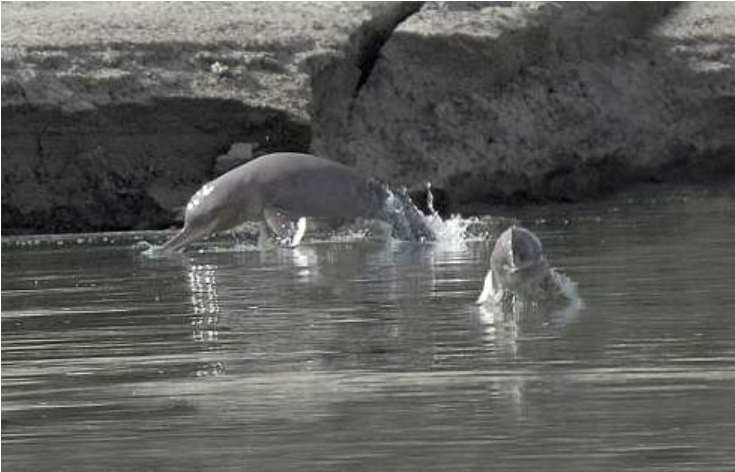
An adult grows to about 2.5 metres long and weighs over 100 kilograms. It is grey with a lighter belly, has a long thin snout lined with sharp teeth, and a small dorsal ridge instead of a tall fin. It often swims on its side near the riverbed, feeding on fish and shrimp. Dolphins are usually seen alone, in pairs, or in small groups, and the bond between a mother and her calf is especially close.
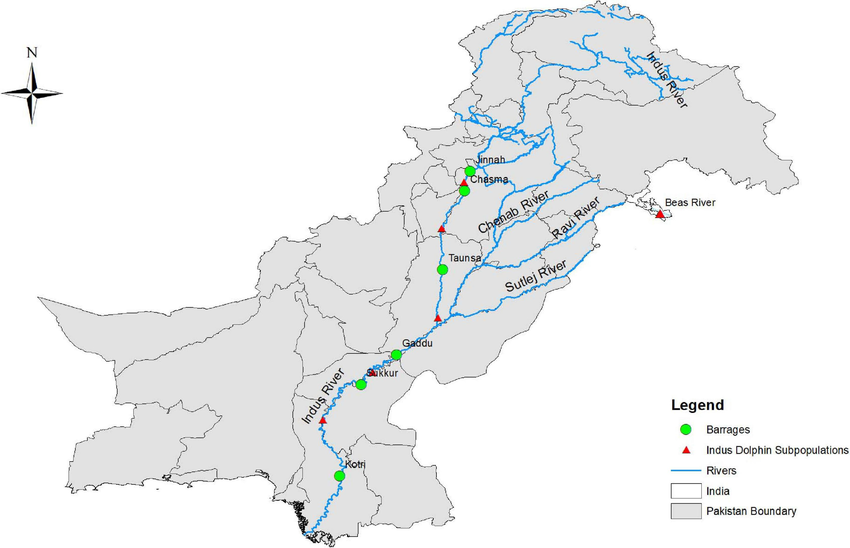
The dolphin once ranged across some 3,400 kilometres of the Indus system, including tributaries such as the Sutlej, Ravi and Beas. Today its range has shrunk dramatically. About 99 percent of the population now lives in a roughly 690-kilometre stretch of the main Indus between the Chashma Barrage in Punjab and the Sukkur Barrage in Sindh, split into three reaches by irrigation barrages. A 2025 survey in India found only three Indus dolphins, all in the Beas River — for practical purposes, this is a dolphin you can only see in Pakistan.
Why Is It Called the Blind Dolphin?
The Indus River Dolphin is functionally blind. Its eyes have no lens and can detect little more than light — in the muddy, silt-laden water of the Indus, vision is almost useless, so evolution took a different path. The dolphin navigates, hunts and communicates entirely by echolocation: it sends out clicks and reads the echoes to build a picture of the river around it.
This is why the dolphin is so hard to spot. It surfaces briefly, often showing only the top of its head and its back, with a short puff of breath, and then it is gone. On a dolphin-watching trip you are watching for a quiet ripple and a grey back in brown water — which is exactly what makes a sighting feel like a prize.
Where to See the Indus River Dolphin in Pakistan
There are three realistic places to see the Indus River Dolphin. The first is the serious wildlife trip; the other two are easier options. Sightings are never guaranteed anywhere — the dolphin is shy, and patience matters more than a schedule — but these are the places where your chances are best.
1. Indus Dolphin Reserve — Guddu to Sukkur (Best Place)
The Indus Dolphin Reserve is the core protected stretch of the river, about 190 kilometres from Guddu Barrage upstream to Sukkur Barrage downstream. It holds the largest concentration of the species — roughly 1,100 animals — and it is the most reliable place to see one. The reserve was created in 1974 and was declared a Ramsar wetland site in 2001.
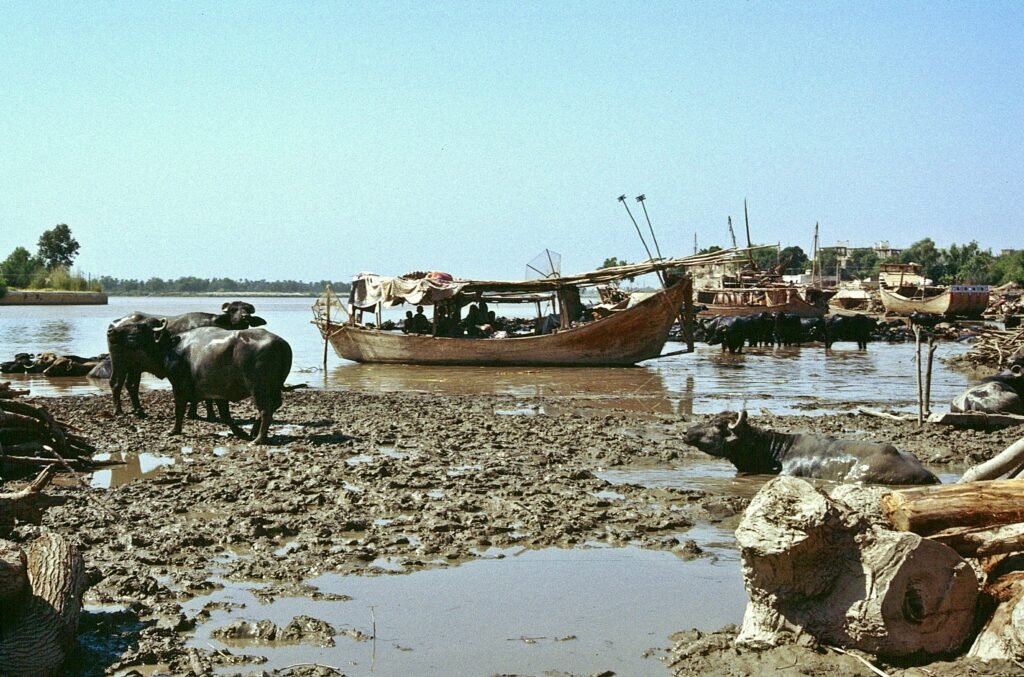
The way to visit is a boat trip arranged from Sukkur. A dedicated trip takes a full day, and the further upstream you go from the city, the better the habitat and the better your chances. Use a licensed boat operator and a local guide who knows where the dolphins gather — they favour deep pools and the calmer water below sandbars, where the current slackens. Confirm current rates locally when you arrange the trip, as prices vary by boat and season.
2. Lab-e-Mehran and the Dolphin View Point, Sukkur (Easiest Option)
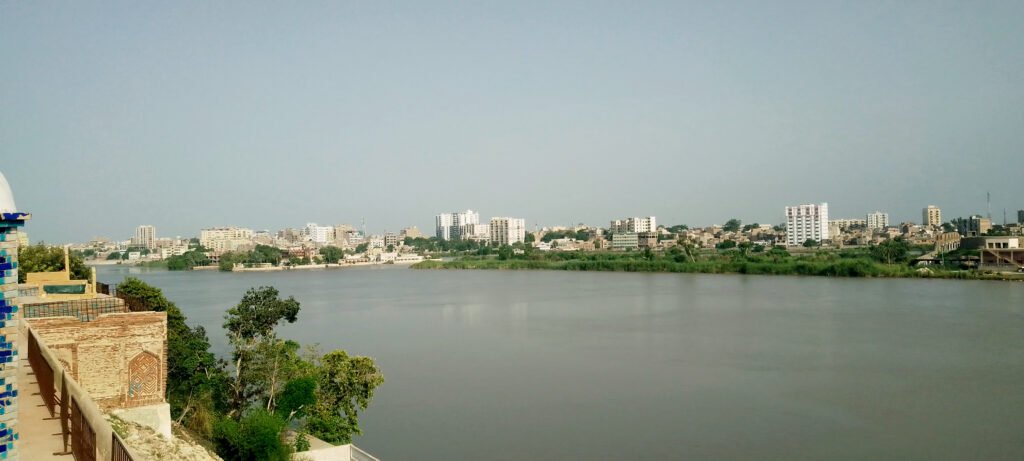
If you are short on time, the easiest option is inside Sukkur city itself. Lab-e-Mehran is a public park on the right bank of the Indus beside Sukkur Barrage, and the Indus Dolphin View Point sits within the park. Dolphins are sometimes seen from the bank here, especially in the calmer water near the barrage and in the early morning when the surface is still. Sightings are occasional rather than reliable, but it costs nothing to look, and the barrage itself — completed in 1932 as the Lloyd Barrage, one of the great irrigation works of its era — is worth seeing on its own. Local boat operators near the barrage and Lab-e-Mehran also run short wildlife trips; ask specifically for the dolphin viewpoint area.

3. Taunsa Barrage, Punjab (Second Site)
The second good dolphin-watching site is below Taunsa Barrage in Punjab. A community-based ecotourism project run by the Sustainable Tourism Foundation Pakistan (STFP) operates boat cruises on the Indus here, with local boatmen and fisherfolk trained as guides. Taunsa Barrage is about a two-and-a-half-hour drive from Multan, and the project runs trips through most of the year. The dolphin population here is smaller than in the Guddu–Sukkur reach, but the organised cruises make it the most structured way to try.
The Indus begins its journey far to the north, in the high mountains, before it reaches the plains of Sindh and Punjab. If you want to see the river in its mountain setting, read our guide to places to visit in skardu.
Best Time to See Indus River Dolphins
November to February is the best season for dolphin watching. In the cool months the river is lower and clearer, the dolphins concentrate in deep channels, and the weather in Sindh is pleasant. Early morning, roughly 6 to 9 AM, is the best time of day — the water is calm and the dolphins are feeding actively.
Avoid the summer. Sukkur has a hot desert climate and summer temperatures regularly pass 45 °C, and the monsoon flood makes the river high, fast and silty. The Taunsa project gives a wider window, from mid-September to mid-April, but the November-to-February core season applies everywhere.
How to Get to Sukkur
Sukkur is the base city for the trip. It sits on the Indus in northern Sindh, about 470 kilometres from Karachi, connected by road on the N-5 National Highway and by rail, and it has a domestic airport. Most visitors come from Karachi by road or train, or fly in and arrange the boat trip locally. One day covers the barrage, Lab-e-Mehran and a short boat trip; two days allow a relaxed pace, including the old city of Rohri across the river and a full-day boat trip into the reserve.
For Taunsa Barrage, the base city is Multan in Punjab, about a two-and-a-half-hour drive away.
The Hunza River is one of the great tributaries that feed the Indus system on its way south. If the mountain rivers interest you, see our complete guide to hunza valley pakistan.
Planning the trip budget? Use our pakistan trip cost calculator to estimate what a Sukkur trip will cost.
How Many Indus River Dolphins Are Left?
About 2,000 Indus River dolphins remain. A national survey in 2021 counted 1,816 animals, and a peer-reviewed study published in 2025 estimated the total at about 1,987. The trend is genuinely hopeful: the first major survey in 2001 recorded only about 1,200 dolphins, and the population has grown by roughly 19 percent between 2011 and 2017 alone. The Guddu–Sukkur reach, the species’ stronghold, grew from about 600 animals in 2001 to over 1,000 by 2017.
That recovery is real, but the species is still listed as Endangered by the IUCN, and its range is still fragmented by barrages. Two thousand animals, divided into separate reaches that cannot mix, remain highly vulnerable — which is why the conservation work below matters so much.
Threats and Conservation
The dolphin’s troubles are almost all human-made. Barrages and irrigation canals have cut the river into isolated reaches, so populations cannot mix. Dolphins swim into canals through barrage gates and become trapped when the canals are drained for maintenance. Fishing nets entangle them, pollution degrades the water, and reduced river flows shrink the deep pools they need.
The response has been running for decades. The Indus Dolphin Reserve has protected the Guddu–Sukkur core since 1974. A rescue programme run by the Sindh Wildlife Department and WWF-Pakistan since 1992 has saved more than 200 dolphins stranded in canals and returned them to the river. In June 2026, Punjab created the Punjnad Indus River Dolphin Sanctuary, covering about 200 kilometres of river and an estimated 440 dolphins, joining with the Sindh reserve into roughly 400 kilometres of connected protected habitat. In July 2026, WWF-Pakistan launched a dedicated dolphin rescue ambulance to speed up emergency response along the Guddu–Sukkur stretch.
Visitors help by choosing responsible operators: licensed boats, local guides, no chasing and no feeding. Dolphin watching, done properly, gives riverside communities a reason to protect the animal.
Tips for Dolphin Watching
- Go early. The first two hours after sunrise are the best — calm water, active dolphins.
- Hire a local guide. Dolphins surface for seconds; a guide who knows the river is the difference between a sighting and a boat ride.
- Bring binoculars. You will often spot the dolphin at a distance first.
- Keep quiet on the boat. Noise carries over water, and the dolphin is shy.
- Never chase or feed dolphins. It is harmful, and it is what responsible viewing is meant to prevent.
- Allow a full day for the reserve trip. A short trip near the barrage is fine for a first look, but the real chances are upstream.
- Do not expect a show. This is not a dolphinarium. A brief grey back in brown water is a genuine sighting of one of the world’s rarest animals — and that is the point.
Frequently Asked Questions
Where can I see the Indus River Dolphin?
The most reliable place is the Indus Dolphin Reserve between Guddu and Sukkur barrages, on a boat trip arranged from Sukkur. The Dolphin View Point at Lab-e-Mehran park in Sukkur sometimes offers sightings from the bank, and Taunsa Barrage in Punjab runs organised boat cruises.
How many Indus River dolphins are left?
About 2,000. A national survey in 2021 counted 1,816 animals, and a 2025 study estimated 1,987. The population has recovered from about 1,200 in 2001, but the species is still listed as Endangered.
Why is the Indus River Dolphin blind?
Its eyes have no lens and can barely detect light. The muddy water of the Indus makes vision useless, so the dolphin navigates and hunts entirely by echolocation — sending out clicks and reading the echoes.
Can you swim with Indus River dolphins?
No. They are wild, endangered, shy animals in a large, fast river. Watch them from a boat with a licensed operator and a local guide, and never chase or feed them.
The map below shows Sukkur Barrage, the gateway to the Indus Dolphin Reserve — the core dolphin-watching stretch runs upstream from here toward Guddu Barrage.
Read more: indus river dolphin
Sources:
- WWF – Indus River Dolphin (species facts and conservation)
- WWF-Pakistan – Indus Dolphin (population surveys and the rescue programme)
- IUCN Red List – Platanista minor assessment (Endangered status)
- Aisha et al. 2025, Endangered Species Research (population estimate of 1,987)
- NOAA Fisheries – Indus River Dolphin (species facts)
- Pakistan Tourism Development Corporation – Ecotourism guide (dolphin-watching sites and seasons)
- Sustainable Tourism Foundation Pakistan – Indus Dolphin Ecotourism (Taunsa Barrage boat cruises)
- TheSea.org – Indus River Dolphin (range, subpopulations and threats)
- Sukkur.net – Indus River Dolphin guide (Sukkur viewing details and Lab-e-Mehran)
- Wikimedia Commons (photographs)